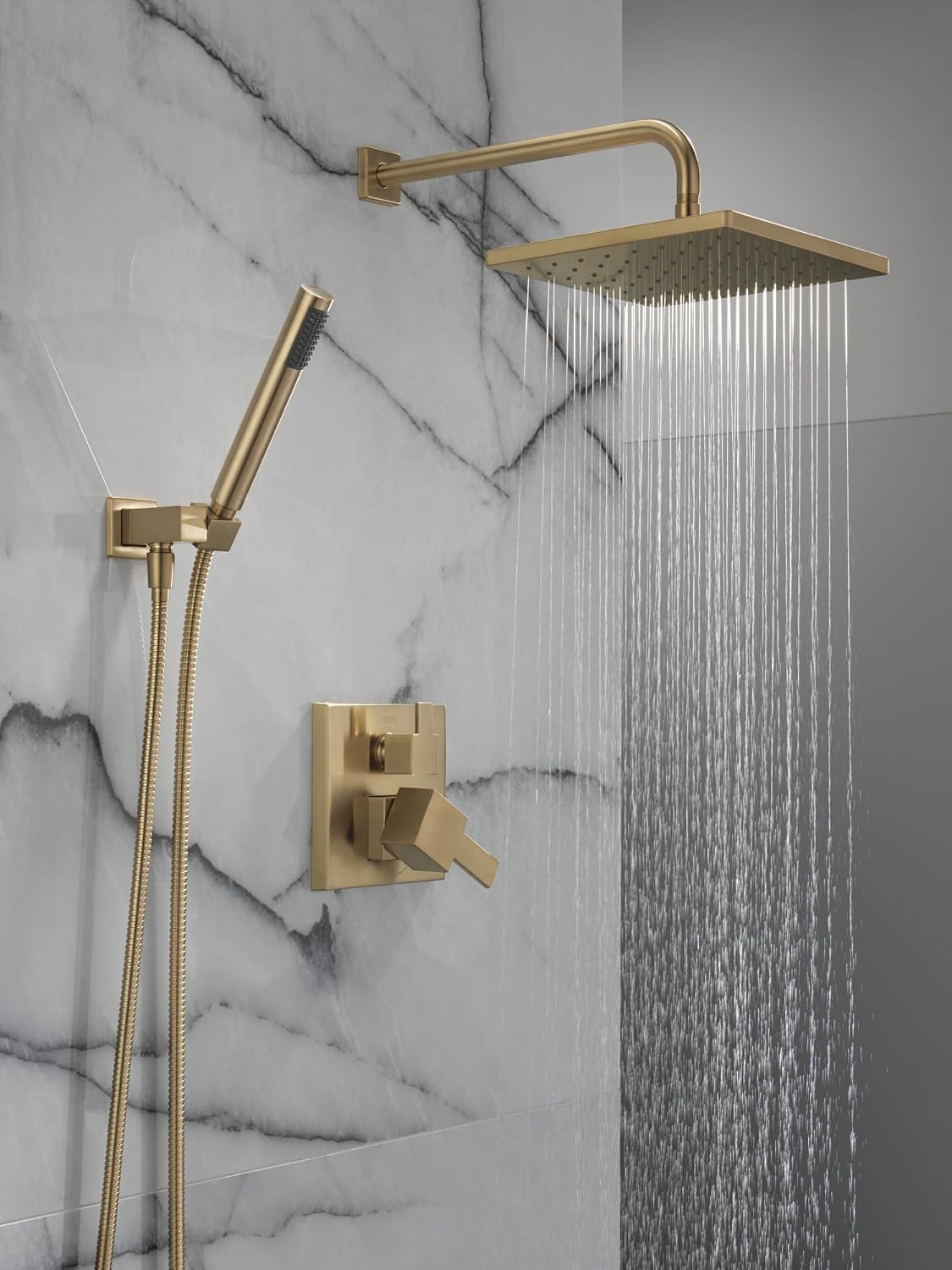
You upgraded to a gorgeous 12-inch rain head — that wide, ceiling-mounted disc that delivers a soaking downpour effect — only to discover it dribbles like a garden hose with a kink. Or you installed a filtered showerhead (a unit with a built-in cartridge that removes chlorine and other contaminants from your water supply before it hits your skin) expecting a noticeable difference, and couldn’t tell it from the builder-grade fixture you replaced. Both are common, expensive disappointments, and they share the same root cause: choosing a showerhead category based on aesthetics or marketing before understanding two non-negotiable variables — your home’s water pressure and your water quality. This guide cuts through both. By the end, you’ll have a clear decision framework: which category makes sense for your specific plumbing conditions, what specs to actually verify before you buy, and where the real trade-offs live between luxury feel, practicality, and long-term cost.
| EDITOR'S PICK[Delta Modern 14 Series Round Ra…](https://www.amazon.com/dp/B0CRWZ2VF2?tag=greenflower20-20) | Mid-tier[Afina High Pressure Rain Filter…](https://www.amazon.com/dp/B0FXLC3CMP?tag=greenflower20-20) | Budget pick[Moen 26009SRN Engage Magnetix 2…](https://www.amazon.com/dp/B07BRPL3PJ?tag=greenflower20-20) | |
|---|---|---|---|
| Type | Rain shower system | Filtered rain shower head | 2-in-1 combo with handheld |
| Finish | Champagne Bronze | Brushed Nickel | Spot Resist Brushed Nickel |
| Flow Rate | — | 2.5 GPM | 2.5 GPM |
| Rain Head Size | 10 in | — | — |
| Handheld | ✗ | ✗ | ✓ |
| Filter Included | — | ✓ | — |
| Price | $689.00 | $109.00 | $83.99 |
| See on Amazon → | See on Amazon → | See on Amazon → |
Why Pressure and Water Quality Are the Only Variables That Actually Matter
Every showerhead category has a pressure floor. Go below it and the experience collapses regardless of brand or price point.
Rain heads — those wide-diameter ceiling or wall-mounted fixtures, typically 8 to 16 inches across — are the most pressure-sensitive category on the market. Their entire design premise is a wide, even sheet of water across a large surface area. The physics are unforgiving: spread the same flow rate across a 12-inch face plate versus a standard 2.5-inch head, and pressure-per-square-inch drops dramatically. Most manufacturers spec a minimum dynamic pressure of 45–60 PSI (pounds per square inch, the standard measure of water pressure in residential plumbing) for adequate rain-head performance, and that’s at the fixture — not at your meter.
The International Residential Code (IRC) Section P2903 sets a minimum supply pressure floor of 40 PSI for residential plumbing, but that’s the code floor, not a comfort target. Between pressure loss across your home’s supply lines, the vertical rise from meter to shower valve, and the flow restriction of whatever valve trim you’re running, a home measuring 55 PSI at the hose bib might deliver 42–46 PSI dynamic pressure at a ceiling-mounted rain head — especially in older homes with ½-inch supply branches instead of ¾-inch trunk lines. This Old House’s guide on testing home water pressure recommends checking pressure at multiple points and at peak-use hours (early morning, evenings) before specifying any high-flow fixture.
Water quality introduces a second axis that pressure alone doesn’t address. Homes on municipal chlorinated supplies — the majority of U.S. households — deal with residual chlorine, chloramines, and in some regions, hard water mineral content that causes scale buildup and affects skin and hair over time. Homes on well water or older municipal systems add sediment, iron, and pH variability to that list. A filtered showerhead addresses this axis; a rain head or handheld does not.
The practitioner mistake is treating these as competing options on a single axis. They’re not. They solve different problems. The real question is: which problem does your shower actually have?
Rain Head Performance: The Pressure Math You Need to Run First
By the Numbers
| Rain head diameter | Minimum recommended dynamic pressure at valve | Typical flow at 60 PSI | WaterSense ceiling |
|---|---|---|---|
| 8 inch | 40–45 PSI | 1.8–2.0 GPM | 2.0 GPM |
| 10–12 inch | 45–55 PSI | 2.0–2.5 GPM | 2.0 GPM |
| 14–16 inch | 55–65 PSI | 2.5+ GPM | Typically exceeds |
(Sources: EPA WaterSense labeled product specifications; manufacturer published spec sheets for Kohler, Hansgrohe, and Moen rain head lines.)
The WaterSense program — EPA’s voluntary water-efficiency certification — caps showerheads at 2.0 GPM (gallons per minute). Most large-diameter rain heads require more than 2.0 GPM to deliver the immersive experience shown in marketing photography, which is why many aren’t WaterSense certified and why they perform poorly below 50 PSI.
Before specifying a rain head, run this quick diagnostic:
- Buy a $10–15 pressure gauge (thread-on type) and test at your showerhead stub-out or a nearby hose bib during peak-use hours.
- If you read below 45 PSI dynamic, a rain head is a disappointment waiting to happen unless you’re prepared to also address supply line sizing or install a pressure-boosting pump — a $400–900 addition that changes the project economics entirely.
- If you read 50 PSI or above, you’re in viable territory for most 10–12 inch heads. At 60+ PSI, a 14–16 inch head becomes realistic.
Architectural Digest’s overview of rainfall showerheads for design-forward renovations consistently notes that designers specify rain heads in new construction or whole-bath renovations where supply sizing is controlled — not as drop-in swaps in older homes without pressure assessment.
Handheld Combo Systems: The Flexibility Play With Hidden Trade-Offs
A handheld/rain head combination — a dual-function system where both a fixed overhead head and a wand on a flexible hose run off a shared diverter valve — sounds like the best of everything. In the right scenario, it is. In the wrong one, it delivers the worst of both.
The core trade-off: Every time you split flow between two heads simultaneously, pressure at each drops. Most residential shower valves deliver a fixed flow rate (typically 2.0–2.5 GPM at working pressure). Run both heads at once and each gets roughly half that. A rain head that dribbles at 1.0 GPM is worse than useless — it’s wet and cold.
The diverter valve matters enormously. Low-cost combo kits use simple two-way or three-way diverters that give you rain head or handheld, not both simultaneously. If you want true simultaneous operation, you need a volume-control valve with dual outlets — Kohler’s Rite-Temp, Moen’s Posi-Temp with a separate volume control, or Hansgrohe’s ShowerSelect iQ systems are common specifications at the contractor level. These add $200–600+ to the rough-in cost over a basic pressure-balance valve, but they preserve pressure management instead of gambling it.
Where handheld combos genuinely shine:
- Households with mobility considerations, where the handheld wand is a functional need, not just a convenience (ADA-compliant grab bar integration is a natural companion spec here)
- Families with children or pets who bathe in the shower enclosure
- Anyone who wants a targeted high-pressure spray option alongside a gentler overhead experience
- Retrofit projects where existing supply pressure is 50+ PSI and the diverter valve can be upgraded without re-roughing
Where they disappoint:
- Sub-45 PSI homes where splitting flow makes both heads marginal
- Projects where the budget covers the fixtures but not the valve upgrade — running a dual-outlet combo on a $40 pressure-balance cartridge valve is a specification mismatch that owners consistently flag in long-run reviews
Filtered Showerheads: Who Actually Benefits (and Who’s Spending Money on Marketing)
Filtered showerheads occupy a crowded market segment with genuinely wide performance variance, and the category is plagued by overclaiming. Let’s be precise about what they can and can’t do.
What a NSF/ANSI 177-certified filter actually does: NSF International’s Standard 177 — the only independent certification specific to shower filtration — tests for chlorine reduction only, under controlled conditions. A product certified to this standard has demonstrated measurable chlorine reduction. That’s meaningful if you’re on a chlorinated municipal supply and have concerns about chlorine’s drying effects on skin and hair.
What most consumer-marketed filtered showerheads don’t reliably do: Remove chloramines (a chlorine compound increasingly used in municipal treatment that’s harder to filter than free chlorine), heavy metals, or fluoride. Many KDF-55 media cartridges (the brass-zinc alloy medium common in these products) have limited effectiveness with chloramines, and their performance degrades with hot water and high flow rates — exactly the conditions of a shower. The EPA WaterSense program and NSF International both note that chloramine reduction requires different media (catalytic carbon, typically) and more contact time than shower filtration realistically provides.
The honest decision tree:
- You’re on municipal water with standard chlorination, concerned about skin/hair dryness: A NSF 177-certified filtered head is a reasonable, low-stakes upgrade. Budget $40–120 for a quality unit with replaceable cartridges; avoid proprietary cartridge systems where replacement cost exceeds $50/cartridge per six months.
- You’re on well water or water with high iron, sediment, or pH issues: A point-of-entry whole-house filter or an under-sink inline filter upstream of your shower valve will outperform any showerhead filter. Address this at the source, not the fixture.
- You’re on a chloraminated municipal supply (check your annual Consumer Confidence Report from your water utility — it lists disinfectant type): Most standard KDF-55 filtered showerheads won’t meaningfully help. Look for units specifically rated for chloramine reduction with catalytic carbon media, or again, consider whole-house treatment.
- You want both filtration and an upgraded shower experience: Some brands offer filtered showerheads with a handheld component or a modest overhead spread. These are reasonable compromises if pressure is adequate (45+ PSI). Don’t expect rain-head immersion from a filtered combo unit — the filter housing restricts flow in ways a clean rain head body doesn’t.
The Decision Framework: If X, Then Y
Here’s the practitioner summary. Map your situation to the column that fits.
If your dynamic pressure at the shower stub-out is below 45 PSI: Skip the rain head entirely until you address supply. A handheld on a fixed bar with a quality pressure-balance valve is your best upgrade. If water quality is also a concern, a filtered handheld unit is a practical single-fixture solve.
If your pressure is 45–55 PSI and water quality is the primary complaint: A filtered showerhead (NSF 177 certified, with catalytic carbon media if you’re on chloraminated water) is the right lead fixture. Add a basic adjustable-spray handheld on a separate slide bar if functional flexibility is needed.
If your pressure is 50+ PSI and it’s a cosmetic/experience upgrade: A 10–12 inch rain head on a dedicated arm is viable, provided your supply branch is ¾-inch copper or equivalent. Pair with a separate thermostatic or pressure-balance valve that can handle the GPM. Hansgrohe’s Raindance and Kohler’s Statement collections are well-regarded entry points with transparent spec sheets; Waterworks and THG Paris serve the luxury specification tier at substantially higher price points but with finish consistency that matters when you’re matching hardware across a full suite.
If you want both and your pressure supports it: A thermostatic valve with dual-volume controls — specified at rough-in, not retrofitted — is the only way to run a rain head and handheld simultaneously without flow compromise. Budget the valve into the project cost before the fixture selection, not after.
The worst outcome in this category isn’t buying the wrong brand. It’s buying the right fixture for the wrong plumbing conditions and discovering it on install day. Run the pressure gauge, pull your Consumer Confidence Report, and let the numbers tell you which upgrade category to shop before you fall in love with a finish.